
🕑 A Night with New York City Neurotech
The city's neurotech scene met itself in person perhaps truly for the first time, and I got to as well.

In an American tech landscape dominated by Silicon Valley firms, New York City is pushing to make a name for itself in neurotechnology, leveraging its trademark financial, legal, scientific, and cultural machinery.
Coordinating this movement is NeuroNYC, a non-profit made up of folks from local leading neurotech groups, whose stated mission is to bridge gaps in the local neurotech ecosystem to catalyze its growth. Toward this goal, the group runs a comprehensive website mapping companies, labs, clinics, and investors in the New York neurotech ecosystem, and it brings these groups together with mixers and summits every quarter. Just before the holidays, I was lucky to have been able to attend their grandest event yet, NeuroBall.
My ticket requested black-tie attire and called for elegant end-of-year festivities, with the opportunity to interact with the metro region’s neurotech scene, including folks from event-sponsoring groups OpenBCI, BlackRock Neurotech, and Cooley. As the sun set on the work week, I was swept up Manhattan Ave by the winter’s first single-digit wind to the door of the Greenpoint venue. Inside, tuxes and sparkling gowns mixed on reclaimed wood floors, gathering around a glowing fireplace and a marble cocktail bar lined with mini martinis and palomas. Between sips lively conversation rang, softened by shelves of ancient bound books and halogen-lit tin panels.
I’d hoped to find relief from the daunting ornament in reconnecting with familiar faces, but first interactions revealed a difference in attending demographics too. I had come to expect a high ratio of academic to industry personnel (with groups of the former typically crowded around the latter, an image of New York neurotech’s current growing pains—there are far more qualified researchers than there are industry research jobs), but at NeuroBall I encountered more industry scientists while coming across just one academic I had met previously. Also present in greater numbers were VCs and attorneys, hinting at New York’s most valuable assets in the neurotech race: world-leading financial and legal institutions. Whether it was the novelty of the event, or its proximity—15-minute walk from OpenBCI’s headquarters, direct G train ride from the Brooklyn Tech Triangle—New York’s neurotech scene showed out to meet itself in person perhaps truly for the first time.
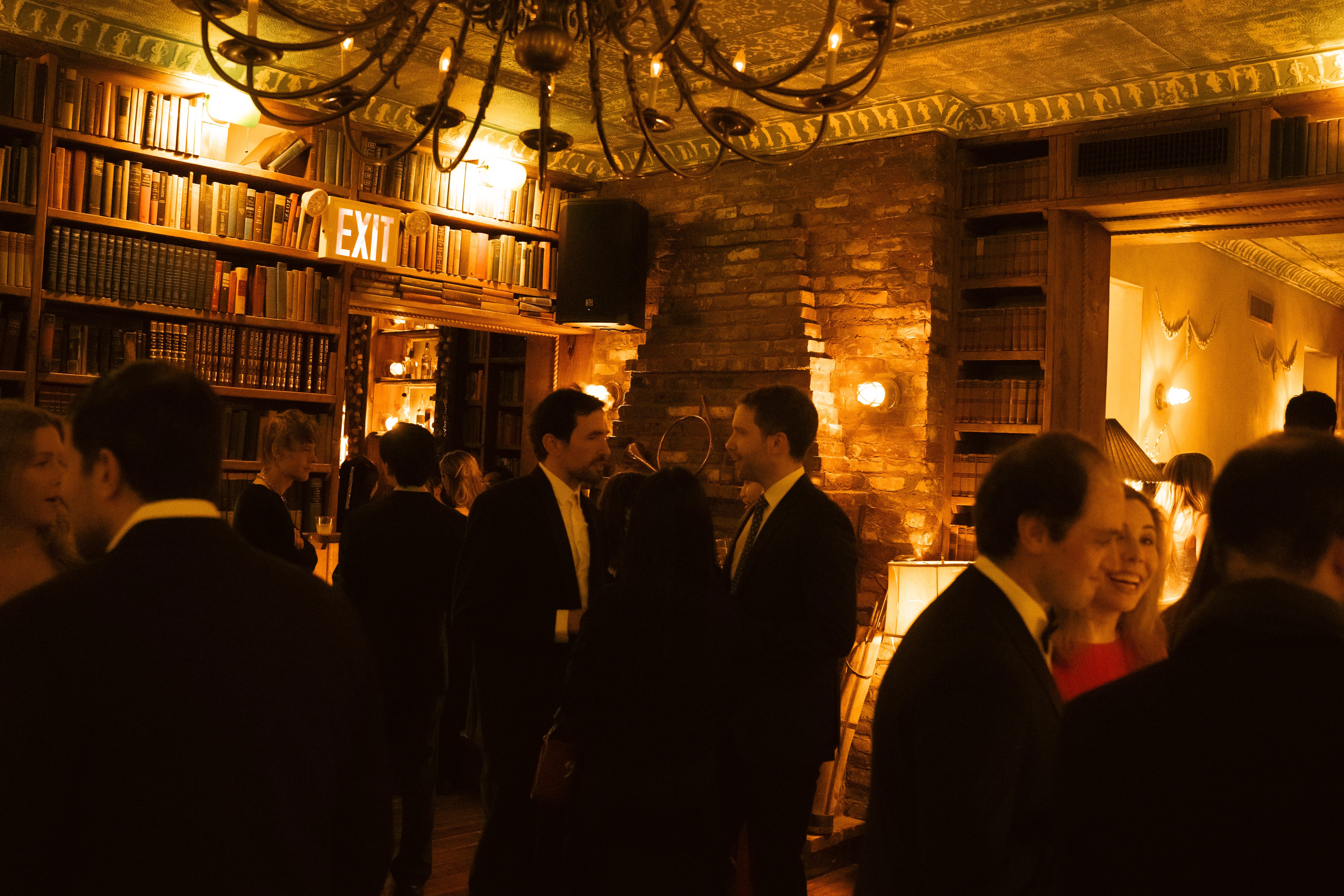
Conversations with researchers were toned with excitement and pragmatism. In a city where war is waged by citizens against subway ads promoting an AI replacement for human connection, I was relieved to find this same humanist conservatism in the minds of scientists I met at NeuroBall, rather than a secret stronghold of Bay Area-born tech theologies. Instead of suggestions to “feel the AGI” or consider the salvific possibilities of brain-computer integration, researchers cited simpler desires such as relieving the burdens of psychiatric disorders or streamlining healthcare as motivations for their work integrating brains and computers. These conversations left me with hope that, if it were to take a spot at the front of American neurotech development, New York’s grounded character could help keep Silicon Valley’s transcendent imagination in check and the trajectory of neurotech ethically guardrailed.
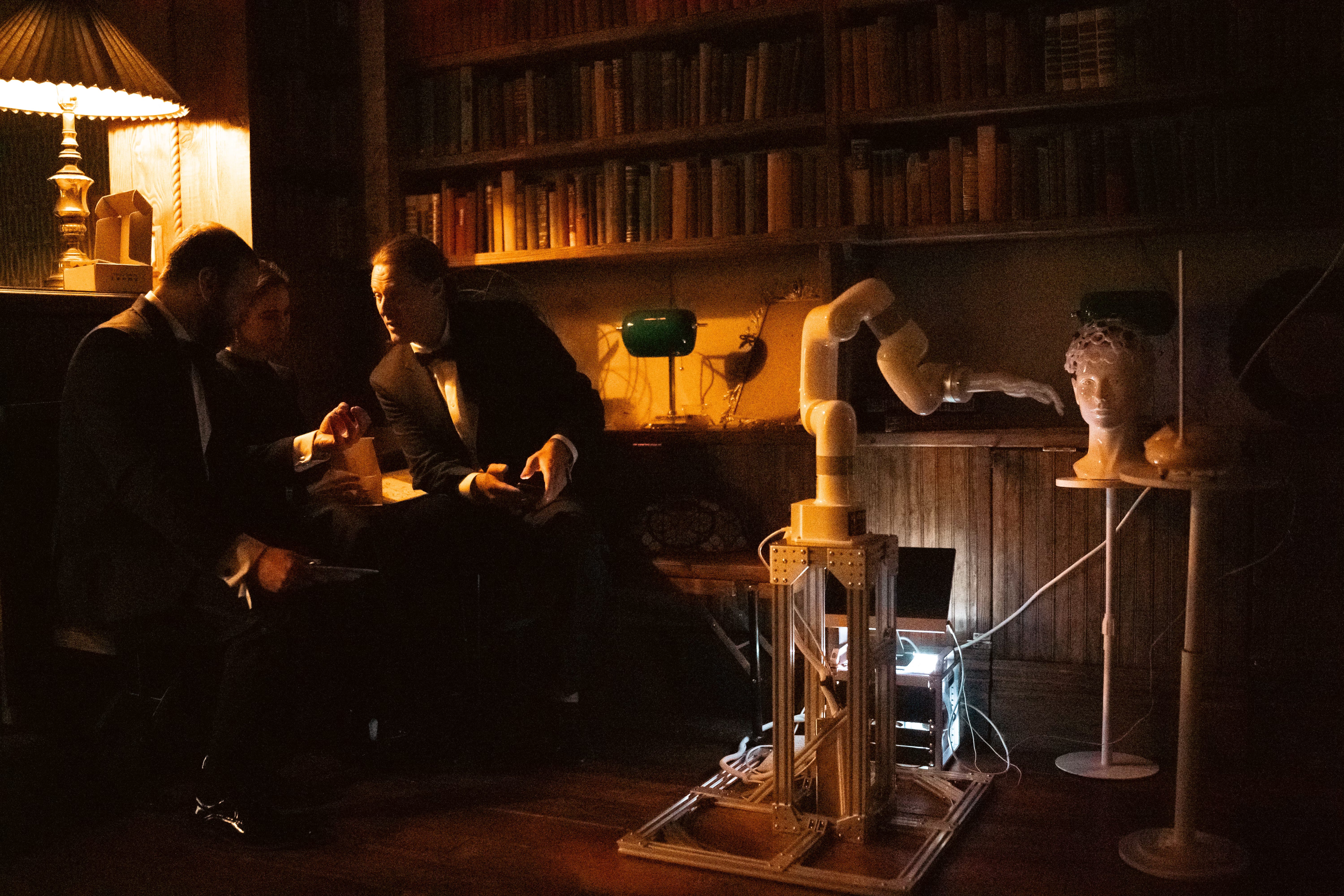
Noted too in conversations was the art installation next to the dance floor, and with a moment I broke away to check it out. The installation, from the group Finis Musicae, starred a robotic arm terminating in a glossy white hand reminiscent of God’s reaching toward Adam, though these fingertips reached toward a retrofuturistic radio playing a single tone. Two artists glowing in tall white gowns and pale makeup put an EEG cap on my head, and at their instruction I focused on the screen of a computer at the other end of a bundle of white cables running from the arm. As I zoned in on the computer’s spewing terminal log, the radio’s tone wobbled then reached a higher pitch, and the arm turned and reached toward me. I unlocked my focus and it returned to the radio, which also wandered away from the tone it had found. I zoned in and out a few times, watching the arm move back and forth and listening to the theremin fluctuate, stalling to note the vibe: the installation was par for the Brooklyn course, visually—sleek, minimal design, ornate wooden backdrop, high-fashioned hosts—but this joining of the art and neurotech scenes was new to me. This group cites the desire to push the boundaries of musical art while keeping humans central as their motivation for creating with neurotechnology. Later I met even more artists, who mentioned being drawn to the jar felt seeing such functional technologies in the non-functional realm of art. Another trademark New York strength was in the building, and though different in practice than finance or law, art points to a commodity with influence just as diffuse: culture. With powerful cultural machinery, New York again holds a unique lever in the neurotech race.
NeuroBall closed out 2025 joining New York’s strongest suits in the race to lead neurotech: science, law, capital, and art. The high profile of the event signaled growth for New York neurotech, and I can only hope my tux will continue to be put to use in its future.
Extremely interesting perspective on the New York hub of the industry
Such a cool glimpse into this world